From Recipe to Learner Model
IN THIS LESSON
Learning Focus: Understanding the fundamental distinction between a hard-coded algorithm and a machine-learning model.
Essential Question: When do we need a machine to learn, and when can we just give it the rules?
Further Reading/Viewing:
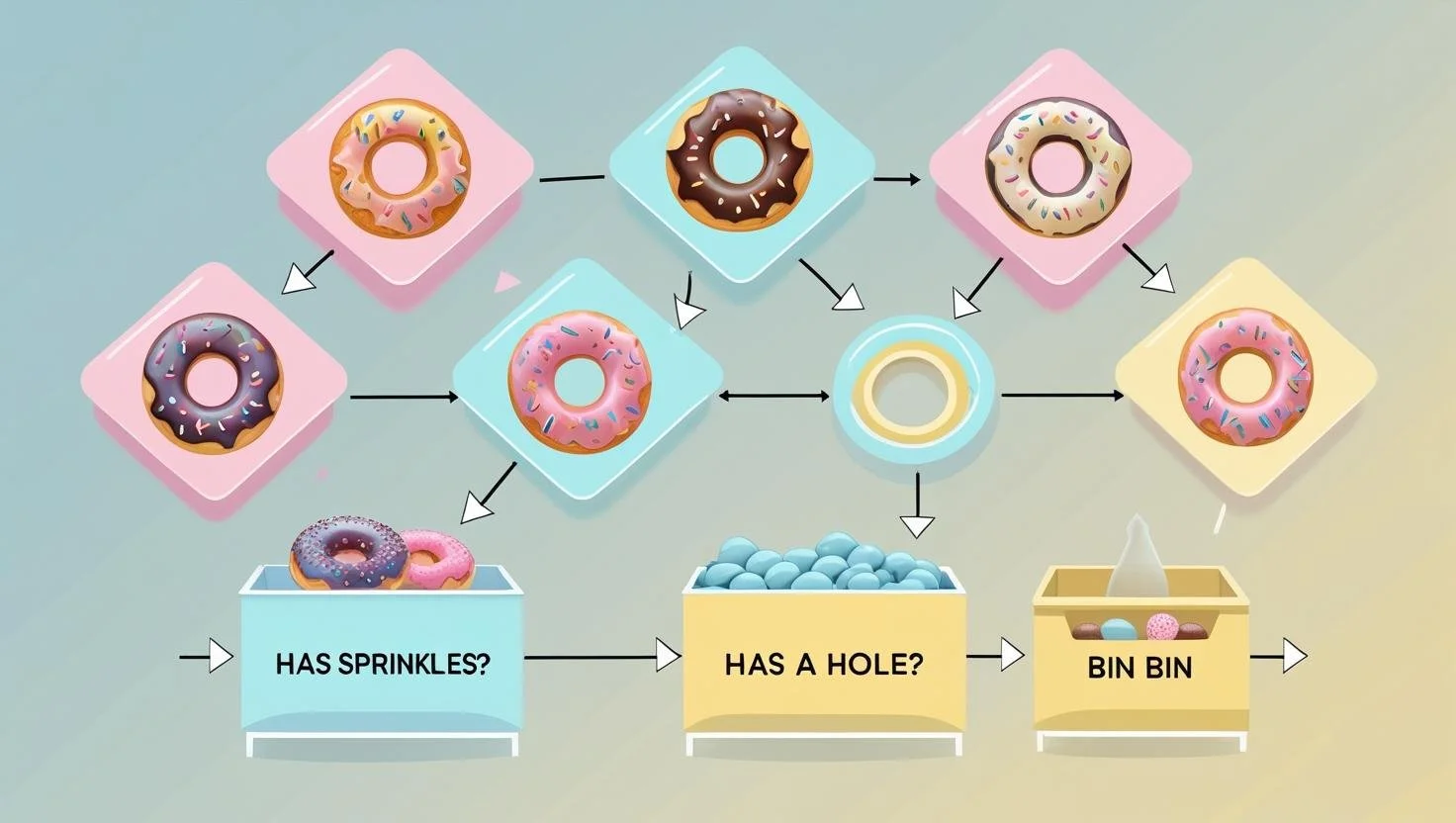
Let’s Discuss
Based on the video, which system (The Algorithm or The ML Model) would be better for...
Sorting student essays by word count? (Algorithm)
Recommending a new book to a student based on their reading history? (ML Model)
Identifying spam emails? (ML Model)
Core Concepts Explained: The 'How-To' Guide vs. The 'Learning by Example' Guide
Discussion Prompt:
Think of a task in your classroom. Would it be better solved with a fixed set of rules or by a system that learns from examples? Why?"
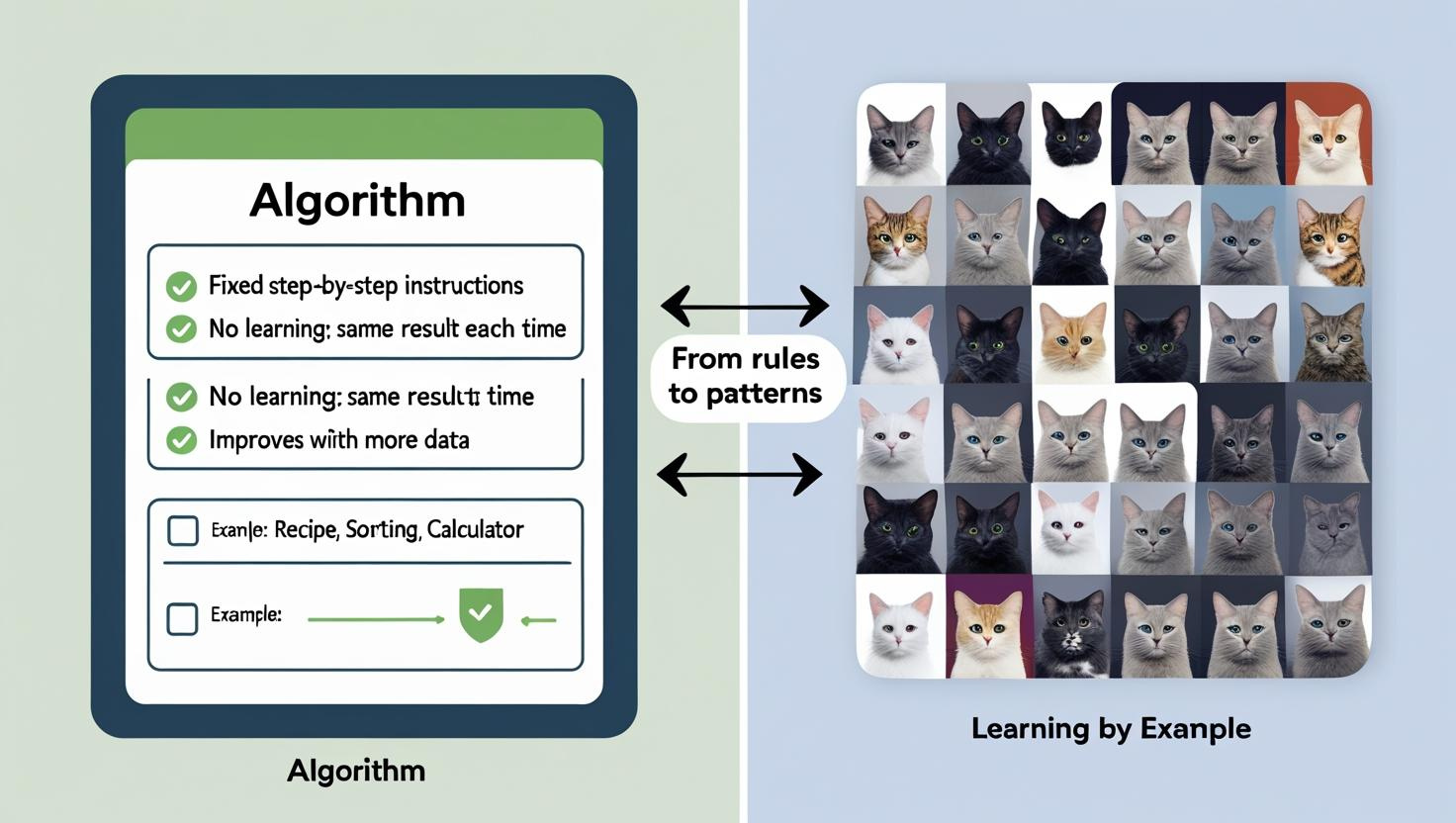
Algorithm: A finite sequence of well-defined, computer-implementable instructions, typically to solve a class of specific problems or to perform a computation. It's like a recipe; the steps are fixed.
Machine Learning Model: A mathematical representation of a real-world process. ML models are "trained" rather than explicitly programmed. They learn patterns from data and can make predictions about new, unseen data. It's like learning to identify cats by looking at thousands of cat pictures, not by following a list of rules.
Reflection
Think about an AI tool you've used recently (e.g., a recommendation engine on a streaming service, a language translation app). Do you think it operates based on a fixed algorithm or a machine learning model? Explain your reasoning in 2-3 sentences.
From the Alan Turing Institute